Built Where No One Else Goes The Room The Moment You
Decades of patient safety work have moved the system-level needle. SafetyBuddy fills a different gap — the patient in the room in real time with no channel no lever and no voice that lands in time.
Open a section below — ▶ plays that section only.
Twenty Years Inside the System
I spent twenty years navigating the American healthcare system — not as a patient but as an engineer a caretaker an advocate and eventually a father who watched his son lose his life in it. My professional life was aerospace. The discipline that shaped everything I know about safety is RCCA Root Cause Corrective Action. In aerospace when something goes wrong you do not score the incident. You do not add it to a quarterly metric. You find the root cause you implement the corrective action and you verify that it cannot happen again. Every time No exceptions The CA part Corrective Action is the entire point. And important work is being done by CDIM to improve Diagnostic Error prevention.
I carried that discipline into every hospital room every specialist's office every discharge conversation I witnessed. And what I found over and over was a system that was extraordinarily good at generating data about what had already gone wrong and extraordinarily slow at putting that data in front of the one person who could act on it in time the patient in the room right now.
My son Zander was seventeen when a post-surgical complication appeared and was dismissed. “Something moved watch and wait” the surgeon said. In aerospace when telemetry signals something wrong after a procedure you do not watch and wait. You escalate You document You act I was an aerospace engineer in that hallway. Something was terribly wrong and I knew it. I had no channel There was no lever to pull No way to put my voice into the loop while there was still time for it to matter.
Zander Cameron Smith died in 2023 at twenty years old three years after that hallway. He was forward-facing future-focused building a life alongside his father in love with AI and what it could become. He was by every measure that counted a five-star human being.
In his memory and for every family still in that hallway
A Century of Patient Safety Work and What It Does
We honor the work of the organizations that have moved the system-level needle AHRQ IHI ECRI Leapfrog The Joint Commission WHO Patient Safety the Johns Hopkins Armstrong Institute and the researchers whose landmark work the IOM's To Err Is Human the Makary/Daniel BMJ estimate of 250,000 preventable deaths per year gave the entire field its standing. These are not competitors. They are the reason the conversation exists at all
Their tools are real and essential accreditation standards that raise floors error-reporting systems that find patterns across thousands of facilities refined metrics that let hospital boards measure progress policy frameworks that hold systems answerable over years. This work operates at altitude and it should. System-level change requires system-level instruments
One organization deserves special mention here. CDIM — the Community Improving Diagnosis in Medicine co-founded by Mark L. Graber, MD FACP is doing the specific work of reducing diagnostic error through root cause analysis applied to missed and delayed diagnoses. Diagnostic error is estimated to affect 12 million Americans annually and it was a central factor in Zander's case. Dr. Graber's correspondence with SafetyBuddy's founder helped shape the thinking behind this platform. His work is the proof that the CA in RCCA — Corrective Action — can be applied to the diagnostic process itself not just to procedures not just to systems but to the moment a doctor forms a conclusion
System-Level Safety Work
- Accreditation & standards compliance
- Facility error-rate benchmarking
- Aggregate outcome scoring
- Policy reform and regulatory pressure
- Post-event root cause review
- National preventable-harm reporting
- Provider credentialing oversight
Where SafetyBuddy Lives
- The patient in the room right now
- Plain-language understanding of your own record
- Questions prepared before you walk in
- Documentation during the visit not after
- A voice in the loop when normal channels lag
- Peer response when you need someone who has been here
- A record that travels with you not the system
See the full list of organizations whose work SafetyBuddy stands alongside Patient Safety Allies →
What the System Looks Like From Inside It
Same visual story as the homepage something real on the phone and a bright light on the team listen to this patient. Tap With & Without YOU for the full six-step diagram.
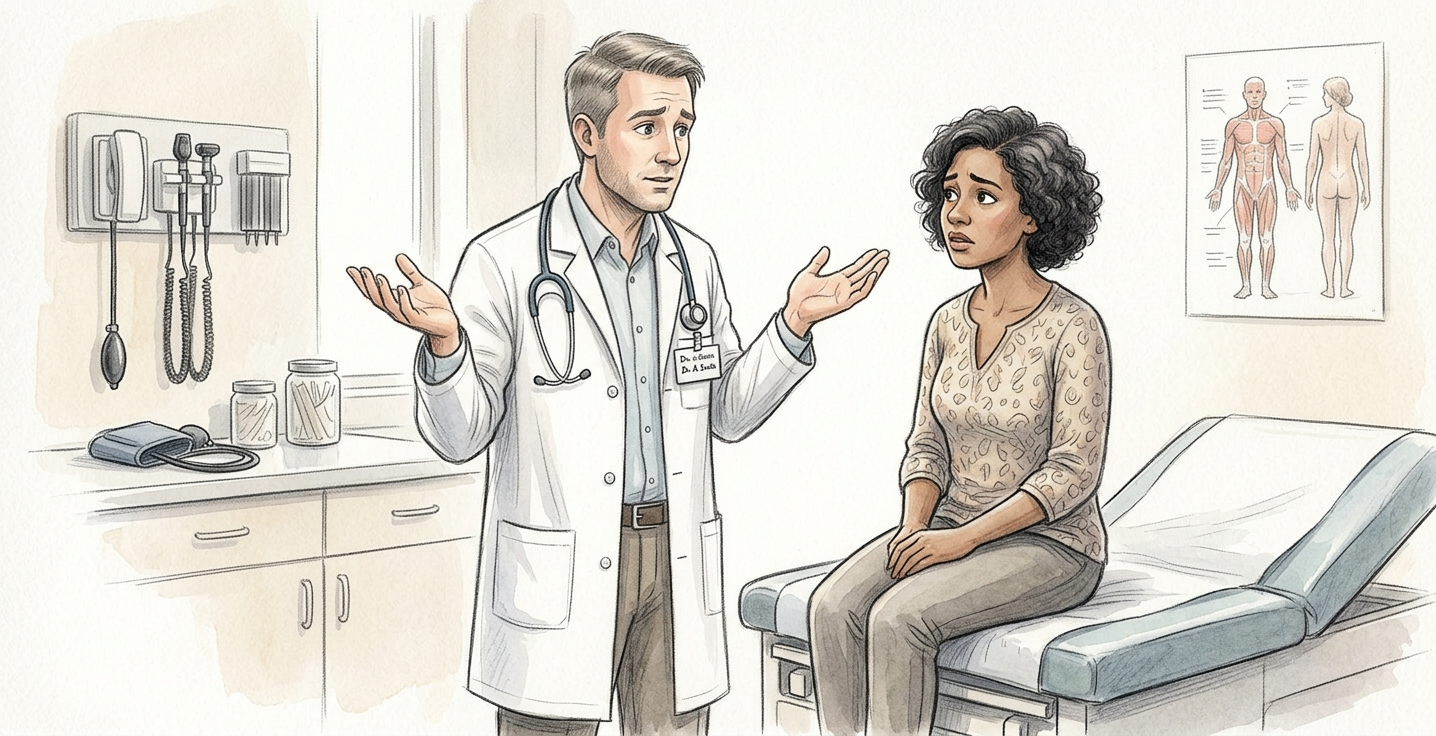
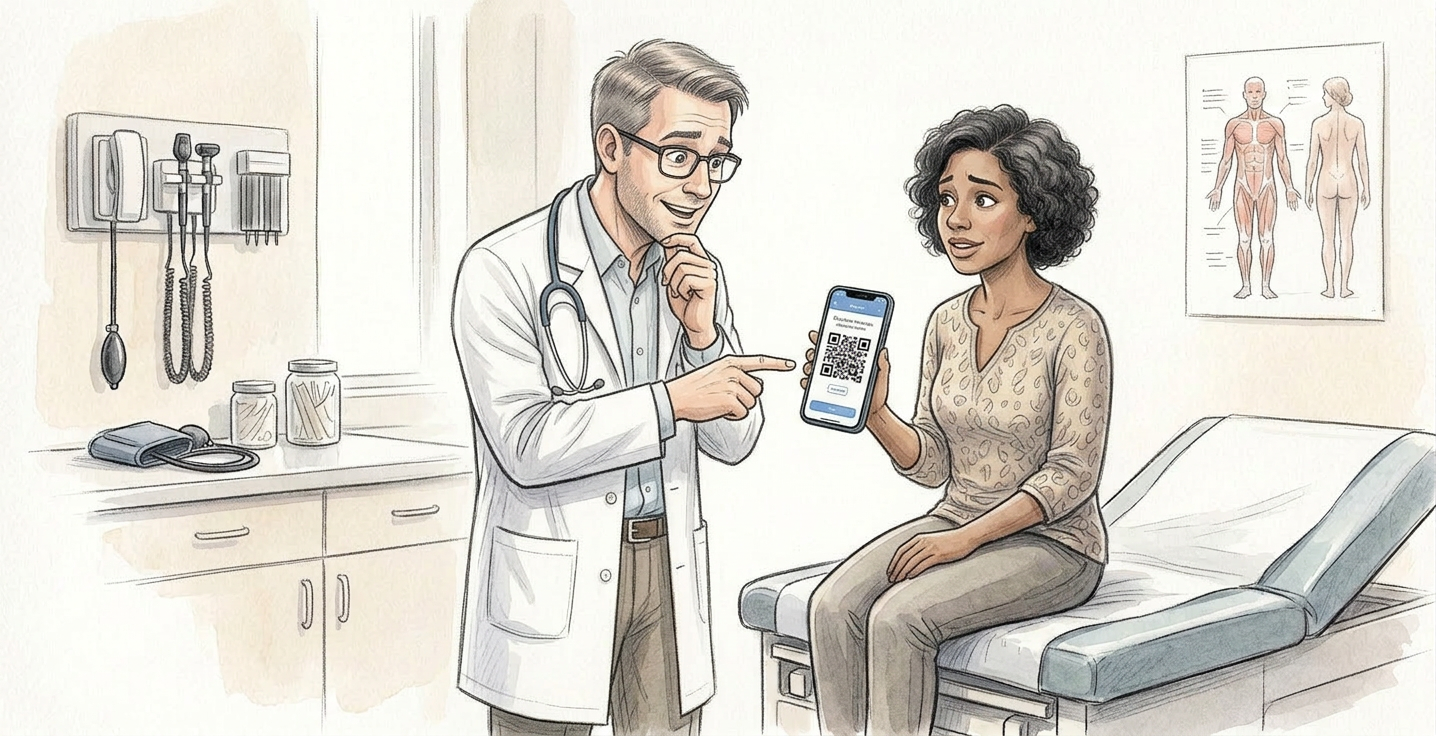
The gap is not a mystery. Every patient safety organization knows it exists. The gap is structural the instruments built for system-level accountability are not designed to operate at the speed of a single dismissed concern in a single hospital hallway at 2am. That speed is where patients lose. That speed is exactly where SafetyBuddy operates
RCCA The Most Direct Path to Corrective Action
In aerospace RCCA is not optional and it is not slow. Root Cause Corrective Action is the strongest most direct path from a detected failure to an eliminated cause. You do not score the incident. You do not wait for the annual safety report. You find the root You apply the correction You verify Every time
The root cause of Zander's loss was not a single physician's decision. It was the absence of a corrective action loop that included the patient. The system had plenty of data. What it lacked was a mechanism for the patient's observation the most proximate sensor of all to enter the loop at the speed of the harm. SafetyBuddy is that mechanism
Patients Say — Not a Rating System — A Distress Signal
The star shape is familiar. The world recognizes it instantly. SafetyBuddy keeps the shape and bends it to mean something more urgent The scale does not measure the provider. It measures how much help the patient needs right now
Other Platforms
- 1★ = don't buy / don't visit
- 5★ = do buy / recommended
- Stars measure the provider
- Low rating = verdict
- High rating = consumer endorsement
The Zander Scale™
- 1★ = I need help is anyone who has been here listening?
- 5★ = You will not need our help here
- Stars measure patient distress and relief
- Low = a plea a flare a rescue signal
- High = good care visible and copyable
This is not semantics. It is a structural change in what the platform does. Low-end submissions are not verdicts they are requests I have been here Here is what helped High-end submissions are not endorsements they are patterns good care is happening here Copy it
One principle governs every page that touches patient input
Every Tool Built Around One RCCA Step
SafetyBuddy is not a collection of features. It is a lifecycle one tool for each phase of the patient's path each one anchored to a specific step in the RCCA loop that the healthcare system has not built for the patient
Zero Harm Has Not Been Achieved
The medical-safety industry names Zero Harm as its stated goal. Industry data show the goal is not yet met. Preventable harm continues at scale the Makary/Daniel BMJ estimate alone puts the number at approximately 250,000 preventable deaths per year in the United States. SafetyBuddy does not need to argue whether the gap is real. The industry has already acknowledged it
That acknowledgement is the patient's standing. A low rating on the Zander Scale is not an accusation it is a patient exercising a documented defensible request grounded in the system's own stated and unmet goal. The SOS flow can pre-fill the language so the patient does not have to find words mid-crisis
This is rescue language not revenge language. It cites the system's own scoreboard. Until medicine reaches Zero Harm alert patients are the difference SafetyBuddy is the alert patient's toolkit
One Man One Tiny Action — Saved the World
Stanislav Petrov 1983. Any single patient could be the next Petrov. The tools are free. The record is yours. The mission is Zander
SafetyBuddy is a patient empowerment and information management platform. It is not a licensed medical provider a regulatory body or a legal service. Patient submissions represent personal experiences and are protected under Section 230 of the Communications Decency Act. All submissions must comply with community guidelines and FTC guidelines for truthful factual content. SafetyBuddy is not affiliated with any State Medical Board the Centers for Medicare & Medicaid Services (CMS) or any licensing authority. SafetyBuddy is for rescue not revenge